
How to Boost Sales with an Amazon Product Rank Improvement Service
Most sellers think a quick edit will push their product to the top. In reality the Amazon engine looks at real buying signals, not just words. In this guide you’ll learn how the ranking system works, a proven step‑by‑step rank improvement process, and how to pick the best amazon product rank improvement service for a large catalogue.
Understanding Amazon Ranking Factors
Understanding Amazon ranking factors is the first step for any amazon product rank improvement service. Amazon’s goal is simple: show the items that will sell and keep shoppers happy. It does not try to give information like a search engine. It wants a sale.
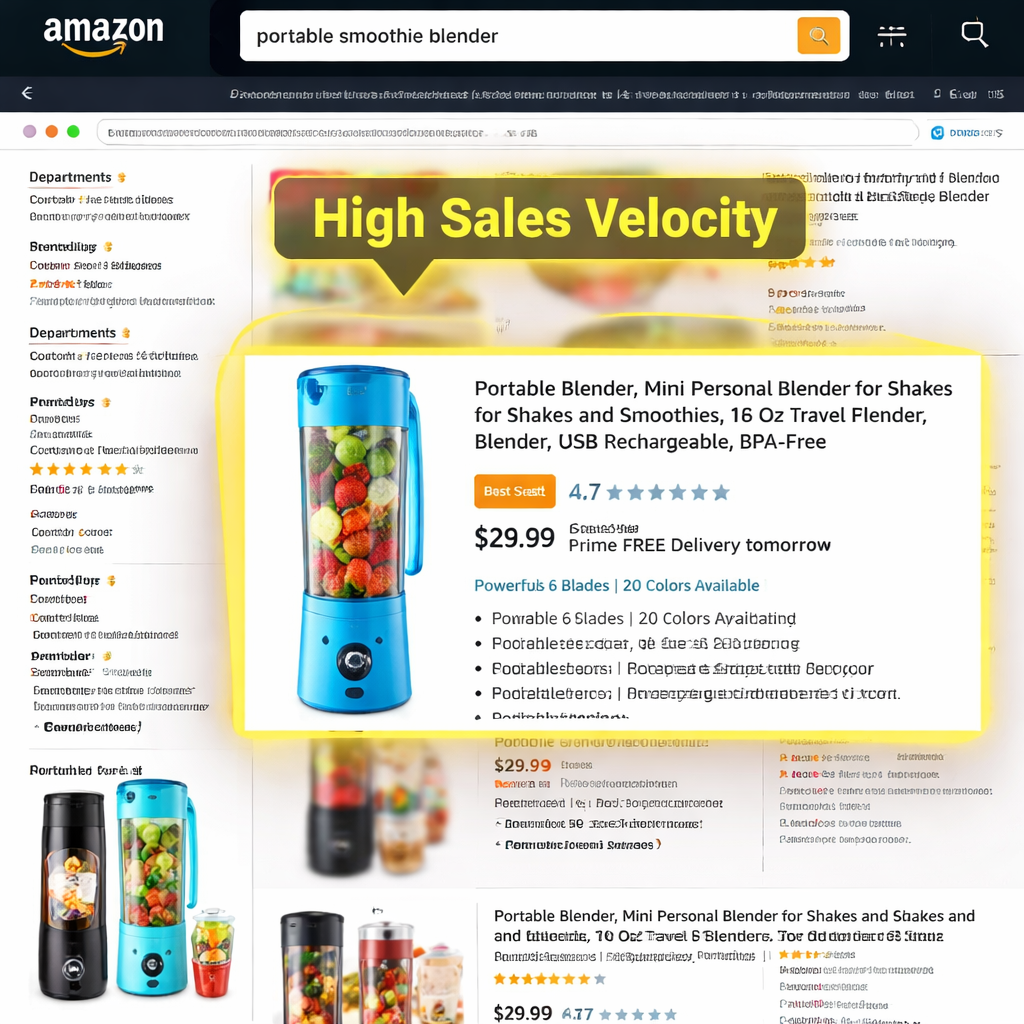
When a shopper types a query, the algorithm looks at thousands of listings. It then checks how many sales each listing gets after that exact search. This is called keyword‑level sales velocity. If many buyers buy your wireless mouse after searching “wireless mouse for macbook,” Amazon learns that your product deserves the spot for that phrase.
Here are the top signals Amazon uses, in order of importance:
- Sales after a specific keyword. Direct sales tell the algorithm the listing matches intent.
- Conversion rate. If shoppers click and then buy, the signal gets stronger.
- Inventory health. Out of stock items lose the signal quickly.
- Review quality. Good, recent reviews that mention product features boost the signal.
- Price competitiveness. Price itself is not a direct factor, but it affects sales and conversion.
And Amazon also looks at compliance. Listings that break policy are hidden. That means you must keep the product safe and the listing clean.
How can you see these signals? The Sellerise Keyword Hunter tool shows sales per keyword and lets you pick the battles that matter. It avoids guessing on keywords that Amazon never links to your ASIN. Using a tool like that gives you real revenue data, not just search volume.
Imagine you sell a set of silicone spatulas. You notice the keyword “heat resistant spatula” brings many impressions but few sales. The tool shows the conversion rate is low. You can then improve the bullet that talks about heat resistance, add the phrase to the title, and watch the sales grow.
Action tips you can start with:
- Check keyword‑level sales velocity weekly.
- Audit conversion rate for top 20 keywords.
- Fix any missing required attributes in the catalog.
For more on how AI assistants read listings, see Amazon Rufus and Conversational AI: How to Optimize Your .... And remember, the keyword data comes from Amazon’s own reports, not third‑party guesses.
Amazon also rewards listings that stay in stock. When you keep at least 30 days of inventory based on current velocity, the algorithm sees a stable supply and keeps the rank. If you run out, the rank drops fast.
Reviews matter too. Ask buyers for honest feedback at the right moment. Automated review request tools can help you get more reviews without breaking policy.
Step-by-Step Rank Improvement Process
Following a step‑by‑step rank improvement process is what every amazon product rank improvement service should do. The process starts with data, moves through optimization, and ends with monitoring.
Step 1: Pull raw data. Use the Selling Partner API to get the Business Report, the Search Term Report, and the Brand Analytics catalog performance file. These reports give you impressions, clicks, sessions, and sales per ASIN.
Step 2: Find the gaps. Look for listings that have high impressions but low sessions. That signals a CTR problem. Look for high sessions but low sales. That signals a conversion problem.
Step 3: Prioritize. Not all listings need work at once. Create a priority queue based on revenue impact and the size of the gap. A high‑revenue ASIN with a 0.2 % CTR should be fixed before a low‑revenue ASIN with a 0.5 % CTR.
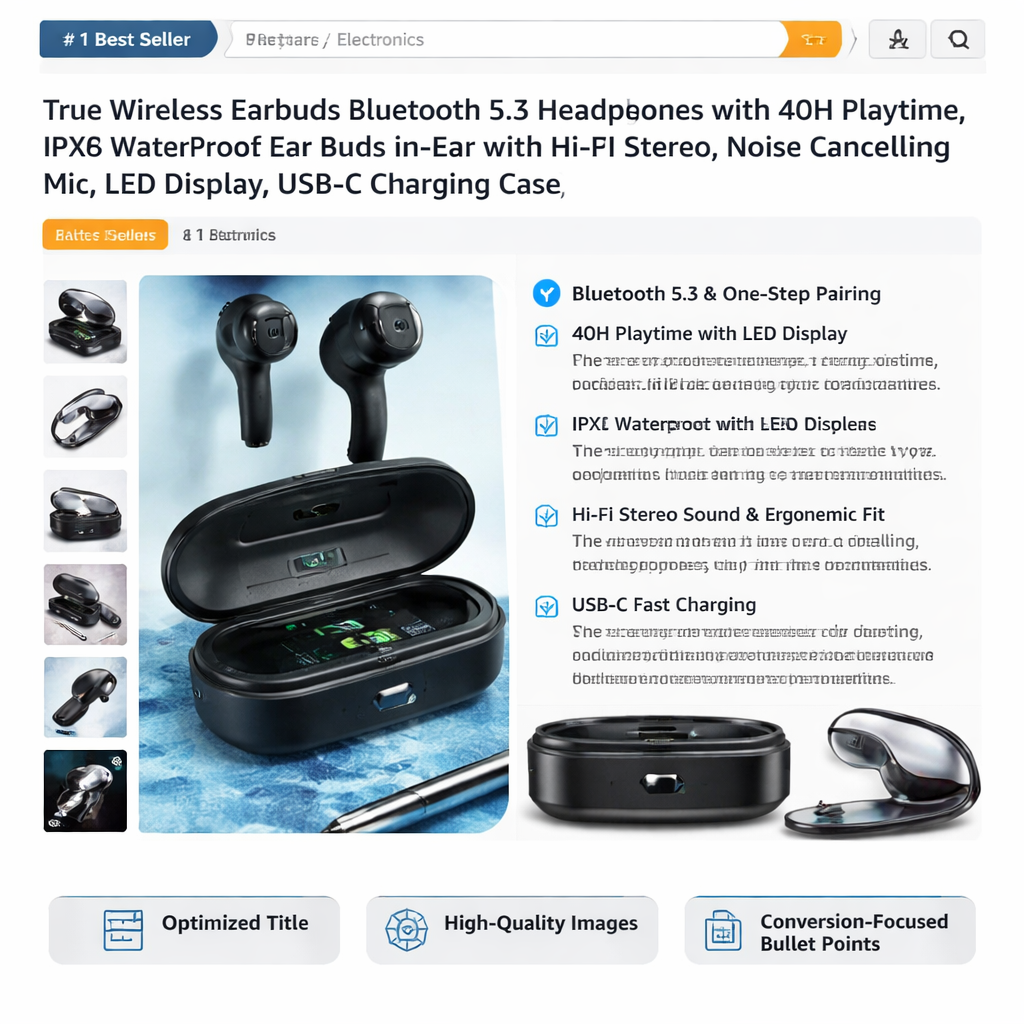
Step 4: Optimize the title. Put the primary keyword in the first 80 characters. Add a clear benefit. Example: “Stainless Steel Water Bottle – 24 Hour Cold Retention – Fits Standard Cup Holder.” This matches the phrase shoppers use and tells the algorithm the product fits the need.
Step 5: Rewrite bullet points. Start each bullet with a benefit, then give a specific fact. “Keeps drinks cold for 24 hours – Tested with ice‑cube challenge, no warm spots.” This boosts conversion because shoppers see the exact claim they care about.
Step 6: Clean up backend terms. Use all 250 bytes, avoid repeats, and include synonyms. Write them as space‑separated words without commas.
Step 7: Improve images. The main image should fill 85 % of the frame, be white background, and be at least 2000 px on the longest side. Show the product in use if allowed. This alone can lift CTR by a few points.
Step 8: Test. Use Amazon’s Manage Your Experiments to run A/B tests on title, image, or bullet changes. Look for a statistically significant lift before rolling out to the whole catalog.
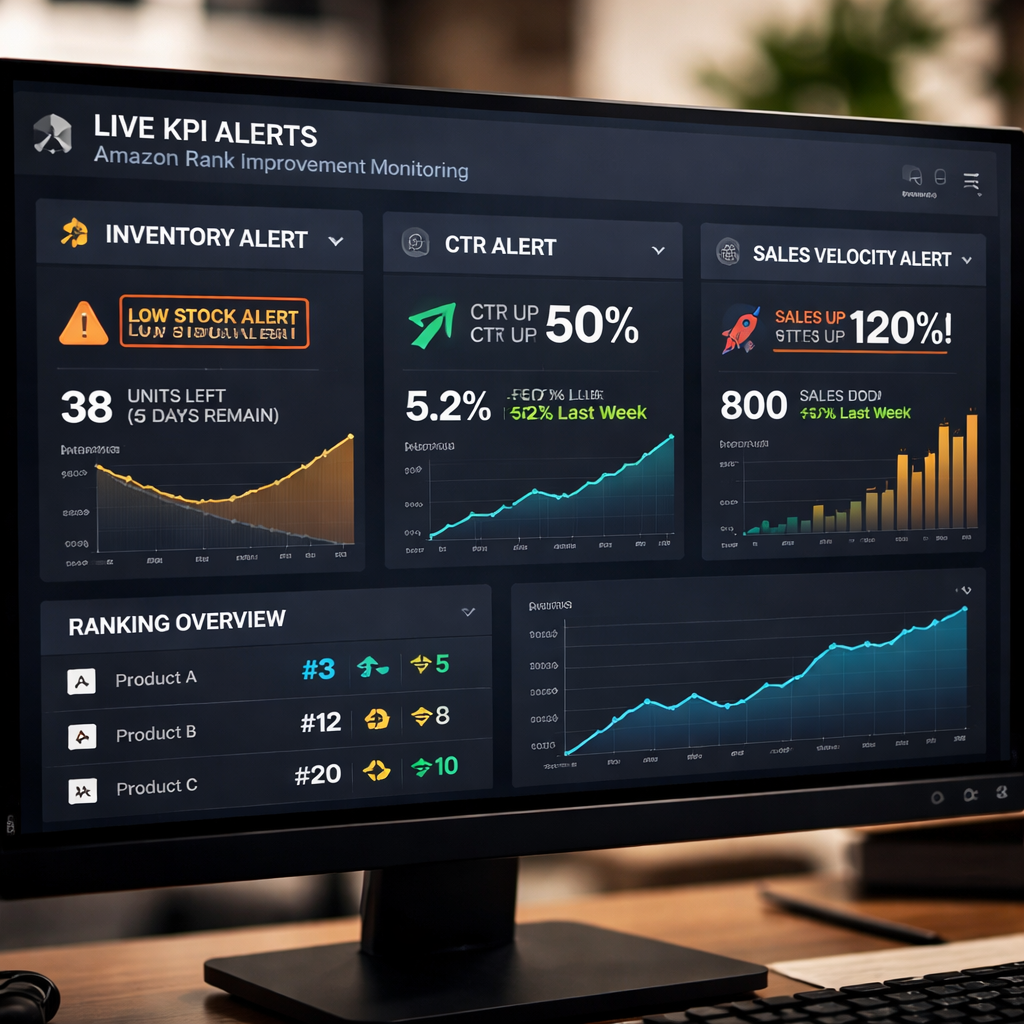
Step 9: Monitor. Set up daily API pulls that flag any drop in sales velocity, CTR, or inventory health. When a flag appears, re‑enter the queue.
Here’s a quick checklist you can copy:
- Pull reports via SP‑API each morning.
- Identify top 10% of listings by impressions.
- Rank them by conversion gap.
- Apply title, bullet, and image fixes.
- Run an experiment for 7 days.
- Log the result and move to next item.
For a deeper dive into best‑seller ranking tactics, read Webgility’s guide on improving Amazon sales rank. For image and copy tips, check SquareShot’s optimization guide. Both sources are up‑to‑date for 2026.
And remember, every change should be backed by data. If you change a bullet and see a 5 % lift in conversion, note the pattern. Apply the same style to similar products.
Choosing the Right Amazon Product Rank Improvement Service
Choosing the right amazon product rank improvement service means comparing tools, teams, and cost. You need a partner that can handle data at scale and act fast.
First, look at data access. A service that uses the SP‑API gives you real performance numbers. That beats a tool that only scrapes public rankings. Direct API data lets you see true impressions, clicks, and sales per keyword.
Second, check the workflow. Does the service run a continuous loop (measure → prioritize → fix → re‑measure) or does it offer a one‑time audit? Continuous systems keep up with Amazon’s daily changes, while a single audit can become stale in weeks.
Third, evaluate the human element. AI can flag gaps, but experts must decide the right copy and image fixes. A good service blends AI‑driven signals with expert review.
Below is a quick comparison of three typical options you might see:
| Option | Data Source | Scale | Cost Model |
|---|---|---|---|
| Manual agency audit | Scraped rankings + client reports | 20‑30 % of catalog | €200‑500 per ASIN per project |
| Hybrid tool + consultant | SP‑API + expert review | Full catalog, prioritized | Monthly retainer + per‑fix fee |
| Full continuous system | API‑driven data + AI alerts | All ASINs, real‑time | Fixed monthly fee, no per‑ASIN cost |
And here’s why a continuous system usually wins for large sellers:
- Speed. Alerts arrive within hours, not weeks.
- Coverage. Every SKU gets at least a baseline check.
- Cost predictability. No surprise per‑ASIN fees.
Watch this short video for a visual overview of how a data‑driven service works at scale:
Now, let’s look at some real‑world examples.
Example 1: A European kitchenware brand used an amazon product rank improvement service that pulled SP‑API data, fixed titles on 1,200 SKUs, and refreshed images on the top 300. Within two months, the average sales velocity rose 18 % and the BSR dropped by 12 places in most categories.
Example 2: A US electronics seller tried a manual agency. The agency rewrote 150 listings, but the rest of the catalog stayed the same. After six months the rankings fell back, and the seller paid €300 k for little lasting gain.
These stories show why you should pick a service that can keep up with change. If you need a fast start, try the hybrid model. If you already have a big catalog, go straight to a full continuous system.
For a deeper look at tool stacks, see SellerSprite’s 2026 tool guide. And for insight into how Amazon’s A9 algorithm now weighs AI signals, read Canopy Management’s A9 explanation. Both articles help you judge a service’s tech depth.
And don’t forget compliance. A good service will also watch for TIC lab flags, safety notices, and Amazon policy alerts. Those can wipe out rank in a day.
Finally, here are three quick questions to ask any provider:
- Do you pull data directly from the SP‑API?
- How often do you re‑run optimization cycles?
- What human expertise backs the AI recommendations?
Answers to these will tell you if the service can truly scale with your catalog.
FAQ
What is the main benefit of using an amazon product rank improvement service?
The main benefit is that you get data‑driven fixes that lift sales velocity. A service that pulls SP‑API data can spot low conversion, missing attributes, and CTR issues fast. Then experts rewrite titles, bullets, and images based on real signals. This cycle keeps your listings fresh and prevents the ranking decay that happens when you wait months between manual updates.
How often should I monitor my listings with an amazon product rank improvement service?
You should set up daily data pulls for impressions, clicks, and sales. The service can flag any drop in sales velocity or CTR within 24 hours. For large catalogs, a weekly priority review of the flagged ASINs is enough to keep the queue manageable. Real‑time alerts for inventory or compliance issues are also key.
Can a small brand with 20 SKUs benefit from a continuous amazon product rank improvement service?
Yes, but the cost balance may differ. Small brands can start with a hybrid model: use a tool that pulls API data and then have an expert review the top‑performing SKUs. If the brand grows quickly, moving to a full continuous system will save time and keep rankings steady as the catalog expands.
Do I need to provide my own product images for the service?
Most services will audit your current images first. If they meet Amazon’s size and background rules, they may suggest small tweaks like angle or filling the frame. If the images are low‑resolution or lack context, the service will recommend a new shoot. Good images boost CTR, which is a direct ranking signal.
How does inventory health affect my amazon product rank improvement service plan?
Inventory health is a core signal. The service watches the “days of inventory” metric from the Business Report. If coverage falls below 30 days, the service will alert you to restock or adjust price. Keeping inventory stable prevents sudden rank drops that no amount of copy work can fix.
What role do reviews play in the ranking process?
Reviews are a strong indirect factor. The service tracks review velocity and look‑for keywords that match your product claims. When reviews mention specific features—like “kept my coffee hot for 8 hours”—that reinforces the listing’s relevance for related queries. Encouraging customers to leave detailed feedback, within Amazon’s rules, can lift the ranking.
Is it worth investing in a service if I already run PPC campaigns?
PPC and organic rank work together. Paid clicks generate sales, which feed the organic ranking algorithm. An amazon product rank improvement service will align your organic keywords with the ones that perform well in ads. This synergy can lower ad spend over time because the listing will win more clicks organically.
How do I know if a service is using real Amazon data or just scraped estimates?
Ask for proof of SP‑API integration. The service should show you a dashboard with live impression, click, and sales numbers for each ASIN. If they only show public ranking positions, they are likely using scraped data, which can lead to missed opportunities and slower reaction times.
Conclusion
Improving Amazon rankings at scale is not a one‑time project. It needs a clear view of sales velocity, conversion, inventory, and reviews. A step‑by‑step process that pulls real data, prioritizes the biggest gaps, and runs fast tests will keep your catalog moving up.
When you pick a partner, make sure they use the SP‑API, run a continuous loop, and have experts to turn AI alerts into real copy changes. The right amazon product rank improvement service can turn a flat catalog into a growth engine, protect you from compliance hits, and save you money on ad spend.
If you’re ready to see where your catalog stands, start with a free suitability scan. It will map your current optimization state, point out the highest‑value fixes, and show if a continuous system fits your needs. Take the first step today and stop letting hidden gaps hold back your sales.
Want this done for your catalogue automatically?
Get a free catalogue scan