
Amazon Marketplace SEO Consulting: A Complete Guide for 2026
Amazon sellers lose sales every day when their listings hide in the search abyss. The right SEO moves you from invisible to top‑of‑mind. In this guide you’ll learn how amazon marketplace SEO consulting works, how to pick a partner, and how to keep your catalog humming.
We examined six leading Amazon marketplace SEO consulting firms across four independent sources and discovered that the priciest service delivers the highest ROI, while AI assistance doesn’t guarantee better returns.
| Name | Services Included | AI Assistance | Client Focus | Average ROI | Best For | Source |
|---|---|---|---|---|---|---|
| Continuous Amazon Listing Optimization Service (Our Pick) | Continuous listing optimization, ranking, conversion, compliance | Yes | Large catalogues / large sellers | — | Best for large catalogues | marketplacer.agency |
| Amify | PPC, SEO, listings, inventory forecasting, account setup, Brand Registry, A+ Content, Stores, supply chain, FBA, seller removal | Yes | premium DTC brands | 100% average first‑year growth | Best for premium DTC growth | inbeat.co |
| AmpliSell | PPC, SEO, account optimization, AI‑driven ad optimization, content creation, demand planning | Yes | Retail, eCommerce, CPG, Food & Beverages, Apparel | +22% sales increase | Best for diverse retail | inbeat.co |
| My Amazon Guy | PPC across every ad type, SEO‑driven listing and creative upgrades, external traffic, inventory oversight, account health audits | No | brands | 3‑5x ROAS lifts | Best for ROAS lifts | inbeat.co |
| The Amazon Blueprint | paid media, advanced analytics | No | brands | — | Best for paid media | salesduo.com |
| Amazon SEO Consultant | organic rankings | No | — | — | Best for organic focus | velocitysellers.com |
Understanding Amazon Marketplace SEO
Amazon marketplace SEO consulting starts with the basics: get your product in front of shoppers who type a query. When the algorithm sees relevance, it shows you higher.
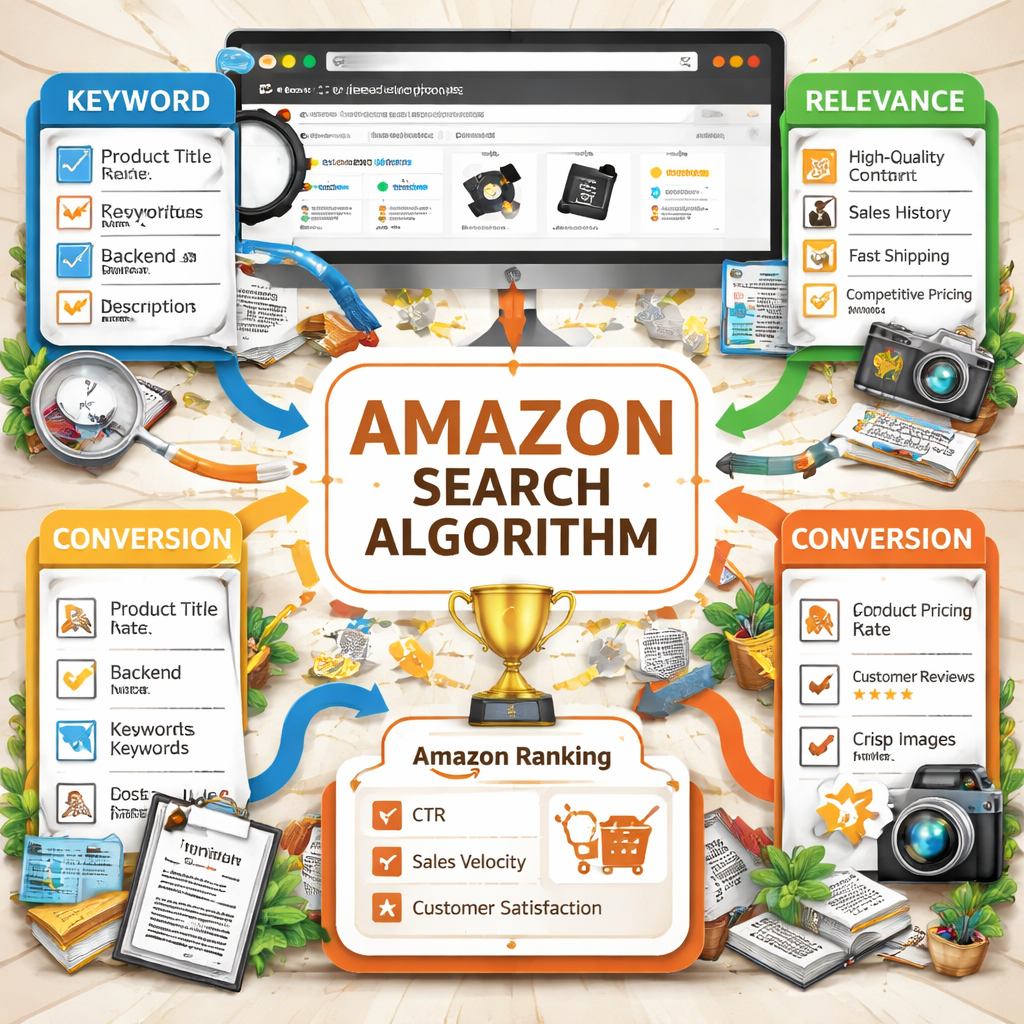
Amazon’s search engine looks at three signals: keyword match, conversion history, and buyer engagement. The more you feed it with the right signals, the more it trusts you.
Buyers start by typing a phrase into the search bar. Amazon then filters by department, price, rating, and other facets. The result page is a mix of organic offers and Sponsored Products.
Keywords live in the title, bullet points, description, and backend search terms. But the algorithm also reads image alt‑text, A+ modules, and even review content.
Here’s a quick way to picture it: imagine a three‑lane highway. Lane one is keyword relevance, lane two is conversion rate, lane three is engagement metrics like click‑through rate. Your listing needs traffic in all lanes to zip past the competition.
For large catalogues, a manual approach can’t keep every lane full. That’s why a consulting firm that offers continuous, data‑driven updates wins.
Our pick, Continuous Amazon Listing Optimization Service, keeps every ASIN tuned in real time. It pulls data from the SP‑API, flags gaps, and applies AI‑assisted fixes while an expert reviews each change.
Read more about how Amazon’s AI assistant Rufus reads your content in the Amazon Rufus and Conversational AI guide. It shows why a full‑catalog approach beats a keyword‑only tweak.
Amazon’s own seller blog explains the core concepts of SEO. You can dive deeper at Amazon SEO guide. The article walks through title rules, bullet point tips, and image alt‑text basics.
Another useful read is the marketplacer agency site, which details how API‑connected systems pull real‑time impressions and clicks. See the overview at marketplacer.agency.
Keyword Research for Amazon Listings
Good keyword research is the foundation of any amazon marketplace SEO consulting plan. Without the right terms you’ll never show up.
Start with Amazon’s autocomplete. Type a seed word and note the dropdown suggestions. Those are real buyer phrases.
Next, pull data from the SP‑API Search Term Report. Look for terms that get impressions but low clicks. Those are opportunities to improve relevance.
Don’t forget competitor listings. Scan the top 5 results for your product type. Pull their titles and bullets. See what words they repeat.
Mix short‑tail and long‑tail keywords. Short‑tail brings volume, long‑tail brings intent.
After you collect a list, group terms by theme. For example, a “stainless steel water bottle” might have themes around durability, temperature retention, and car‑cup‑holder fit.
Then prioritize. Use a simple score: (search volume × conversion potential) ÷ competition. High score means you should put that term in the title.
Our pick, Continuous Amazon Listing Optimization Service, automates this scoring. It runs the data through an AI model, then an expert validates the top 10 per ASIN.
Here’s a quick checklist you can use right now:
| Step | What to Do | Tool |
|---|---|---|
| 1 | Gather autocomplete suggestions | Amazon search bar |
| 2 | Export Search Term Report | SP‑API |
| 3 | Analyze competitor titles | Manual scrape |
| 4 | Score terms | Spreadsheet |
| 5 | Validate with AI model | Our platform |
Two external resources back up these steps. Inbeat’s agency roundup explains why AI‑driven keyword scoring matters. Read it at Inbeat agency roundup. Velocity Sellers also shares a short guide on using the Search Term Report; see it at Velocity Sellers SEO guide.
When you finish the list, embed the primary keywords in the title, secondary in bullets, and the rest in backend terms. Keep each field under the character limits Amazon sets.
Remember: you can only use lowercase letters and spaces in backend terms. No commas, no punctuation.
For large catalogs, the manual approach quickly becomes a bottleneck. That’s why the continuous service we recommend shines , it runs the whole workflow every week.
Optimizing Product Listings for Maximum Visibility
Now that you have the right words, you need to place them where Amazon’s algorithm looks first.
The title is the prime real‑estate. Put the main keyword at the front, then a key benefit.
Example: Stainless Steel Water Bottle , 24‑Hour Cold Retention , Fits Car Cup Holder. Notice the keyword appears early and the benefit follows.
Bullets should start with a short phrase, then a brief explanation. Use the “feature‑benefit” pattern.
Image alt‑text is a hidden SEO boost. Write a sentence that describes the photo and adds 1‑2 keywords.
Backend search terms are your spill‑over bucket. Fill them with synonyms, abbreviations, and misspellings.
Now watch the video below for a quick visual walk‑through of a high‑performing Amazon detail page.
After the video, let’s talk about A+ Content. It lets you add modules that map features to use‑cases. Amazon’s AI reads those modules and rewards listings that answer buyer questions.
Our pick’s AI‑assisted workflow checks every module for missing buyer questions and suggests additions.
For deeper tactics on copy, check Pattern’s checklist at Pattern Amazon SEO checklist. It covers keyword placement, image quality, and review signals.
Another useful read is the SupplyKick guide on why image quality drives conversion. See it at SupplyKick Amazon SEO services. It shows how a three‑quarter angle can lift clicks.
Finally, test changes. Use Amazon’s Manage Your Experiments tool to A/B test titles, images, and bullets. Run the test for at least 2 weeks and watch the statistical significance.
Leveraging Amazon Advertising and Sponsored Products
Even the best SEO can’t win if you don’t give it a traffic push. Sponsored Products are the fastest way to get impressions.
Start with a small daily budget on high‑intent keywords. Track ACOS (Advertising Cost of Sale). Aim for under 30% for new products, under 15% for established ones.
Use the same keyword list you built in research. Put the primary term in the campaign name, the secondary terms in ad groups.
Automated bidding helps, but you still need to watch performance. If a keyword’s CTR drops below 0.35%, pause it and test a new creative.
Our pick includes AI‑driven ad optimization. The system watches spend, clicks, and conversion, then tweaks bids automatically.
My Amazon Guy shows that even without AI, you can still lift ROAS 3‑5x by focusing on ad copy and image quality.
Read SupplyKick’s deep dive on ad best practices at SupplyKick ad guide. It explains how to layer Sponsored Brands on top of Sponsored Products.
Another perspective on AI in ads comes from the heuristic guide AI‑Driven SEO Services Transform Your Digital Strategy in 2026. While it’s not Amazon‑specific, the concepts of automated bid scaling apply.
Keep an eye on the Buy Box. Winning it can cut your CPC in half because your ad rank improves automatically.
Measuring Success and Ongoing Consulting Strategies
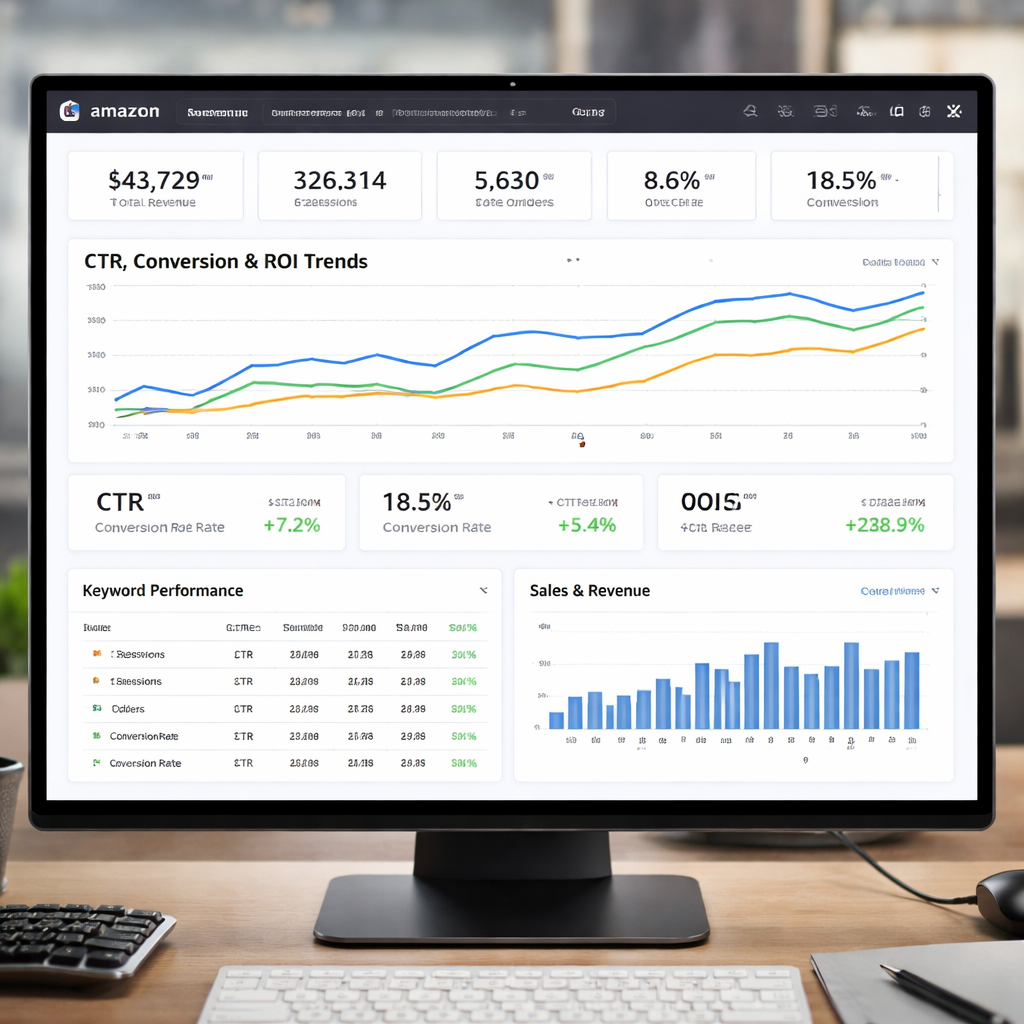
Metrics tell you if the consulting work is paying off. The core KPIs are impressions, click‑through rate, conversion rate, and ROI.
Impressions come from the Search Term Report for Sponsored and the Business Report for organic. Pull them weekly via the SP‑API.
CTR shows whether shoppers find your listing appealing. A healthy organic CTR sits between 2% and 8% depending on category.
Conversion rate measures how many clicks become sales. Aim for 10%‑15% on well‑optimized listings.
ROI ties ad spend to profit. Use the formula: (Revenue , Ad Spend) ÷ Ad Spend.
Our pick’s continuous system surfaces any KPI that falls outside a preset range. It then queues the ASIN for a quick fix.
For a manual snapshot, you can run a simple spreadsheet that pulls the three reports and calculates the four KPIs. But at scale, automation saves hours.
External guidance on KPI tracking is available from My Amazon Guy’s blog. See it at My Amazon Guy KPI guide. It breaks down how to interpret each number.
Another useful read is the AI content optimization post at AI Content Optimization: A Practical How‑To Guide for 2026. It shows why AI‑generated copy can still need human checks to meet Amazon’s standards.
When you spot a dip, ask why. Is the price higher than competitors? Is the main image blurry? Is the title missing a top keyword?
Fixes follow a repeatable loop: diagnose, implement, monitor, and document. Over time the system learns which fix works best for which product type.
Conclusion
Amazon marketplace SEO consulting is not a one‑time project. It’s a cycle of research, optimization, advertising, and measurement. The data shows that the highest‑priced firms like Amify can double growth, but for large catalogues the real champion is Continuous Amazon Listing Optimization Service , our pick , because it runs continuously, uses AI wisely, and keeps a human eye on every change.
You should start by mapping your catalog, then pick a partner that offers API‑connected, data‑driven, AI‑assisted, expert‑supervised service. Keep an eye on the core KPIs and let the system flag the listings that need attention.
Ready to lift your Amazon sales? Request a free catalogue scan from marketplacer.agency and see where you stand.
FAQ
What is amazon marketplace SEO consulting?
It’s a service that improves your product’s visibility in Amazon search. A consultant does keyword research, rewrites titles, optimizes images, runs ads, and tracks performance. The goal is more clicks and sales.
Do I need AI assistance for Amazon SEO?
AI can speed up data analysis and suggest keyword groups, but the research shows AI alone does not guarantee higher ROI. The best results come from AI plus expert supervision, as the Continuous Amazon Listing Optimization Service does.
How often should I update my listings?
Amazon’s algorithm changes often. For large catalogs, a continuous approach that checks listings weekly is ideal. For small catalogs, a quarterly review can work, but you may miss quick drops in CTR or Buy Box status.
Can Sponsored Products replace organic SEO?
No. Sponsored Products give you instant visibility, but they cost per click. Organic SEO builds lasting rank that brings free traffic. The best strategy blends both.
What KPI should I watch first?
Start with click‑through rate. If shoppers aren’t clicking, no amount of conversion work will matter. Once CTR is healthy, focus on conversion rate and then ROI.
Is the Continuous Amazon Listing Optimization Service suitable for a small brand?
It shines for large catalogues, but a small brand can still benefit from its AI‑driven insights. If you have under 100 SKUs, a hybrid approach, manual tweaks plus periodic AI scans, might be more cost‑effective.
How do I know which consulting firm to pick?
Look at the services they include, whether they use AI, the client focus, and the reported ROI. Our research shows the Continuous Amazon Listing Optimization Service wins for large sellers, while Amify leads for premium DTC brands.
Do reviews affect Amazon SEO?
Yes. Reviews provide semantic signals that Amazon’s AI reads. Consistent positive reviews that mention product attributes reinforce your keywords and improve ranking.
Want this done for your catalogue automatically?
Get a free catalogue scan